Plutonium
Dense silvery radioactive metallic transuranic element, belongs to the actinoids. Pu-244 is the most stable isotope with a half-life of 7.6*10^7 years. Thirteen isotopes are known. Pu-239 is the most important, it undergoes nuclear fission with slow neutrons and is hence important to nuclear weapons and reactors. Plutonium production is monitored down to the gram to prevent military misuse. First produced by Gleen T. Seaborg, Edwin M. McMillan, J.W. Kennedy and A.C. Wahl in 1940.
Gallery
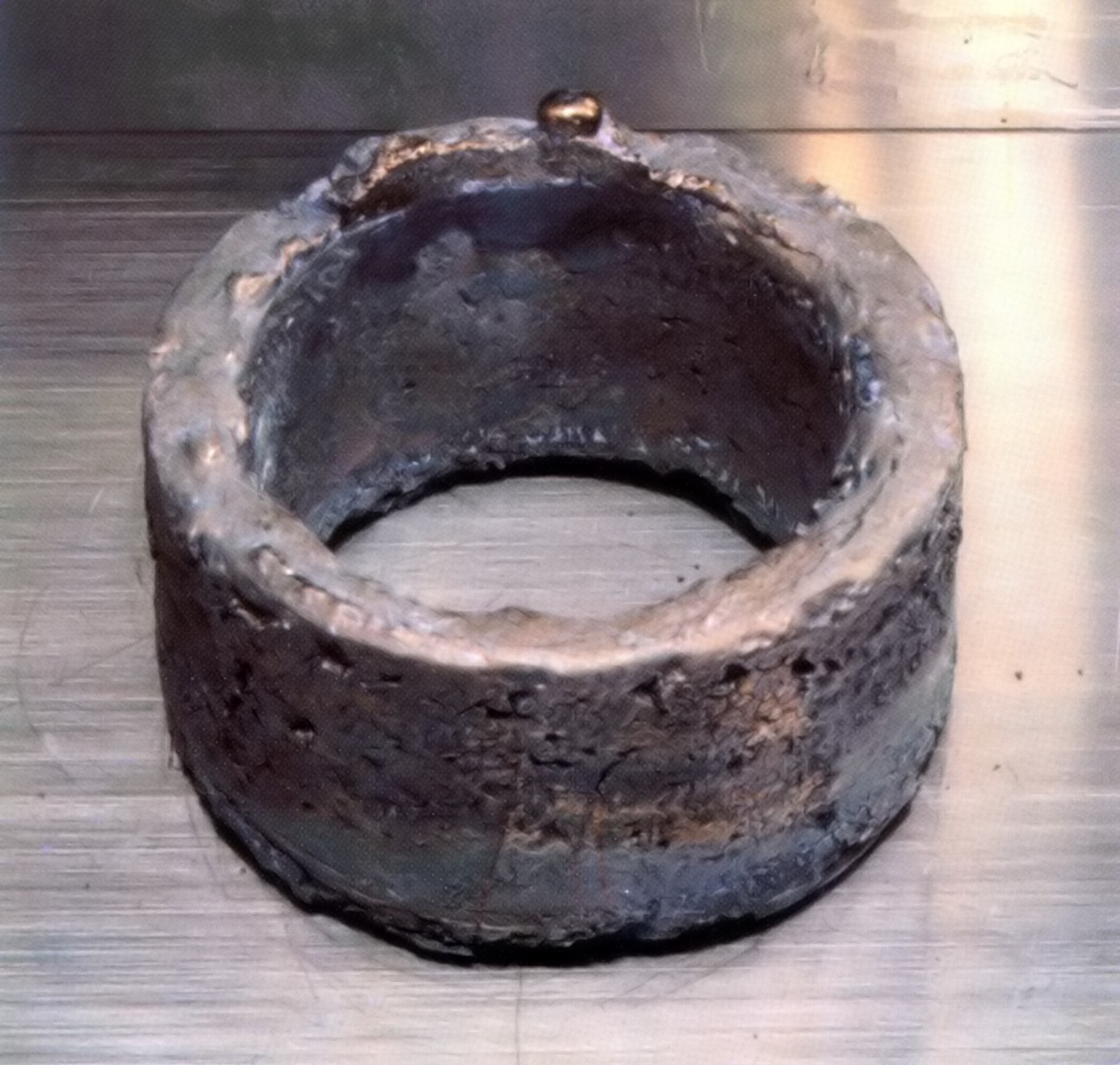
Los Alamos National Laboratory, Attribution, via Wikimedia Commons
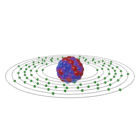
Physical Propertiesmass · density · phase · crystal
Atomic Mass
244Da
Density
19.7000g/cm³
Phase (STP)
Solid
Melting Point
913.1K
Boiling Point
3501.2K
Molar Heat
—
Crystal Structure
MCL
Atomic Radiiatomic · covalent · van der Waals
Atomic (Empirical)
175.00pm
Covalent
172.00pm
Van der Waals
243.00pm
Electronic Propertieselectronegativity · ionization · affinity
Electron Configuration
[Rn] 5f6 7s2
Electron Shells
2, 8, 18, 32, 24, 8, 2
Electronegativity
1.30Pauling
Electron Affinity
—
1st Ionization Energy
6.0kJ/mol
Oxidation States
+3, +4, +5, +6, +7
Orbital DiagramAufbau · Hund's rule · Pauli exclusion
Full: 1s2 2s2 2p6 3s2 3p6 3d10 4s2 4p6 4d10 4f14 5s2 5p6 5d10 6s2 6p6 5f6 7s2Short: [Rn] 5f6 7s2
Ionization Energies (94 known)
Emission Spectrumvisible range · characteristic spectral lines
Abundanceby mass
Biological Role
Extremely toxic due to radioactivity. Alpha emitter that concentrates in bone.
Discovery
Discovered By
G.T.Seaborg, J.W.Kennedy, E.M.McMillan, A.C.Wohl
Named By
—
Year
1940
Nuclear Data
Known Isotopes
27
Stable Isotopes
0
Stable Mass Numbers
None