Polonium
Rare radioactive metallic element, belongs to group 16 of the periodic table. Over 30 known isotopes exist, the most of all elements. Po-209 has a half-life of 103 years. Possible uses in heating spacecraft. Discovered by Marie Curie in 1898 in a sample of pitchblende.
Gallery
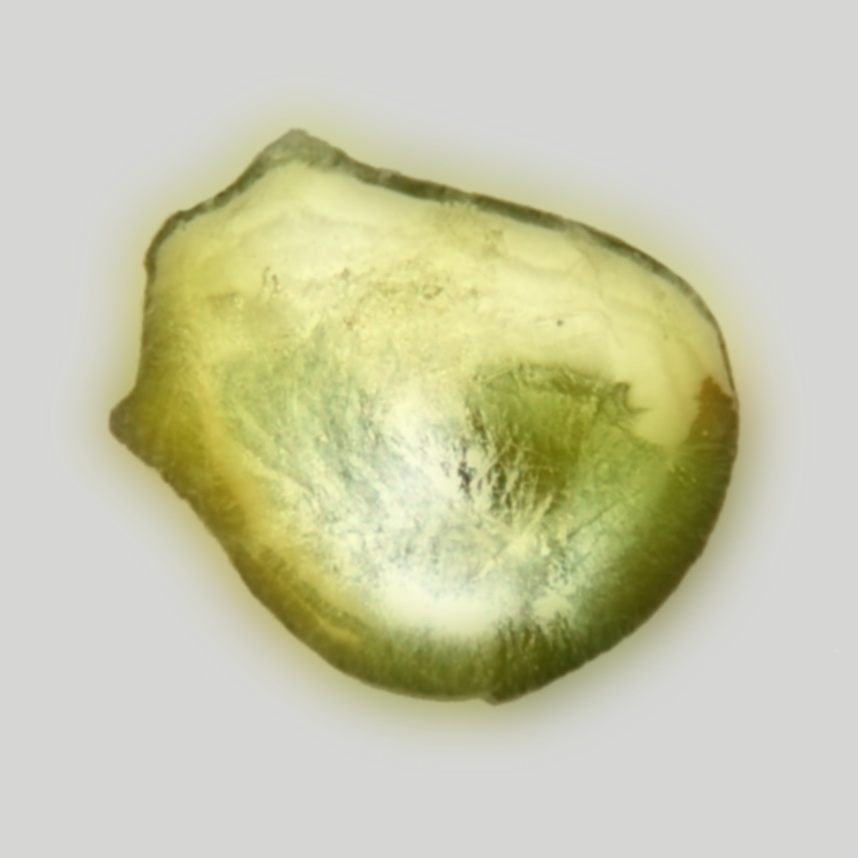
Chemical ELements A Virtual Museum, CC BY 3.0 <https://creativecommons.org/licenses/by/3.0> source: https://images-of-elements.com/polonium.php

Physical Propertiesmass · density · phase · crystal
Atomic Mass
209Da
Density
9.2000g/cm³
Phase (STP)
Solid
Melting Point
527.1K
Boiling Point
1235.2K
Molar Heat
—
Crystal Structure
SC
Lattice Constant
3.350Å
Atomic Radiiatomic · covalent · van der Waals
Atomic (Empirical)
190.00pm
Covalent
145.00pm
Van der Waals
197.00pm
Electronic Propertieselectronegativity · ionization · affinity
Electron Configuration
[Xe] 4f14 5d10 6s2 6p4
Electron Shells
2, 8, 18, 32, 18, 6
Electronegativity
2Pauling
Electron Affinity
1.9kJ/mol
1st Ionization Energy
8.4kJ/mol
Oxidation States
-2, +2, +4, +5, +6
Orbital DiagramAufbau · Hund's rule · Pauli exclusion
Full: 1s2 2s2 2p6 3s2 3p6 3d10 4s2 4p6 4d10 5s2 5p6 4f14 5d10 6s2 6p4Short: [Xe] 4f14 5d10 6s2 6p4
Ionization Energies (84 known)
Emission Spectrumvisible range · characteristic spectral lines
Abundanceby mass
Log scale · ppm = parts per million by mass
Biological Role
Extremely radioactive and toxic. Famously used to poison Alexander Litvinenko in 2006.
Discovery
Discovered By
Pierre and Marie Curie
Named By
—
Year
1898
Nuclear Data
Known Isotopes
42
Stable Isotopes
0
Stable Mass Numbers
None